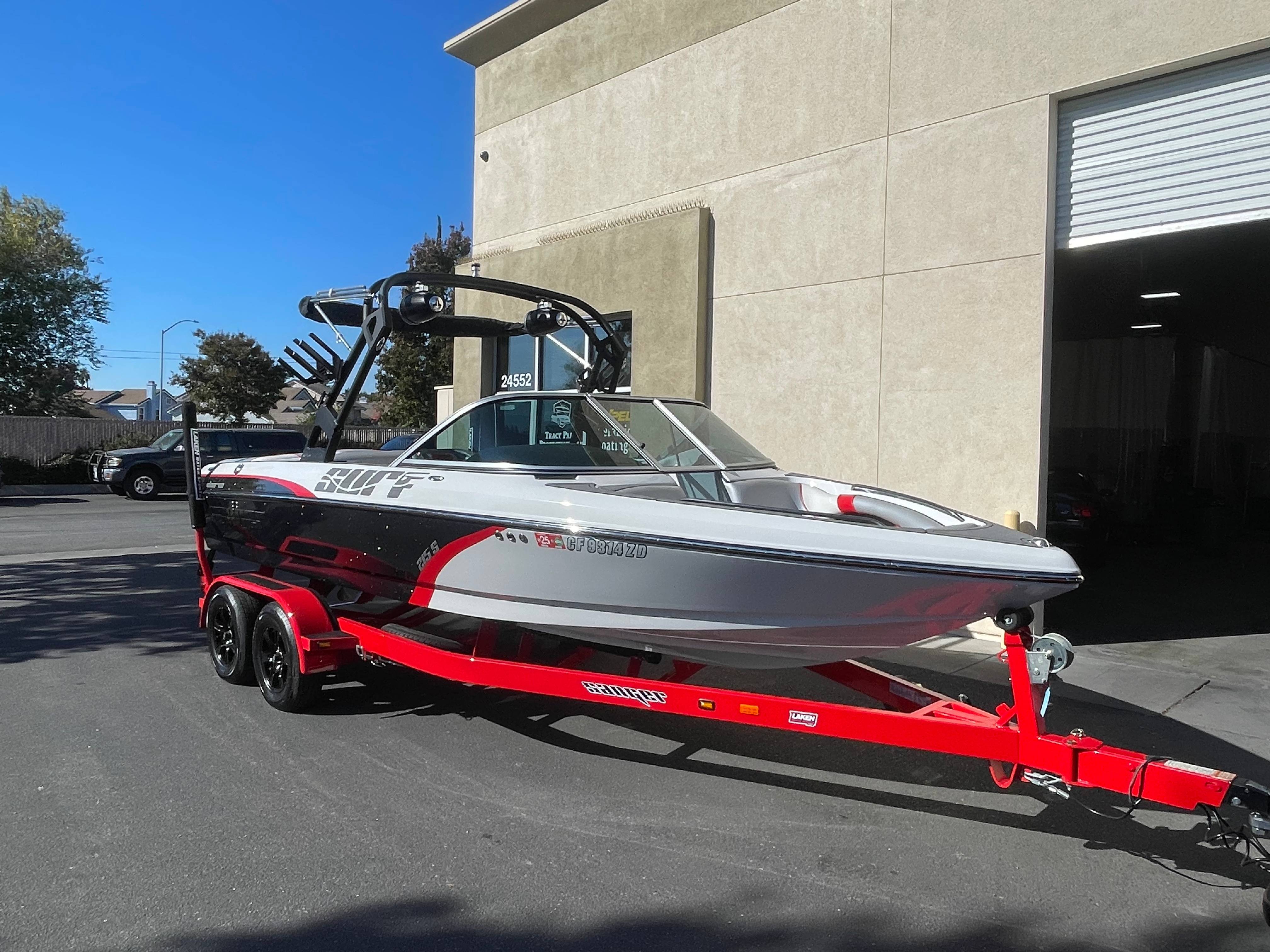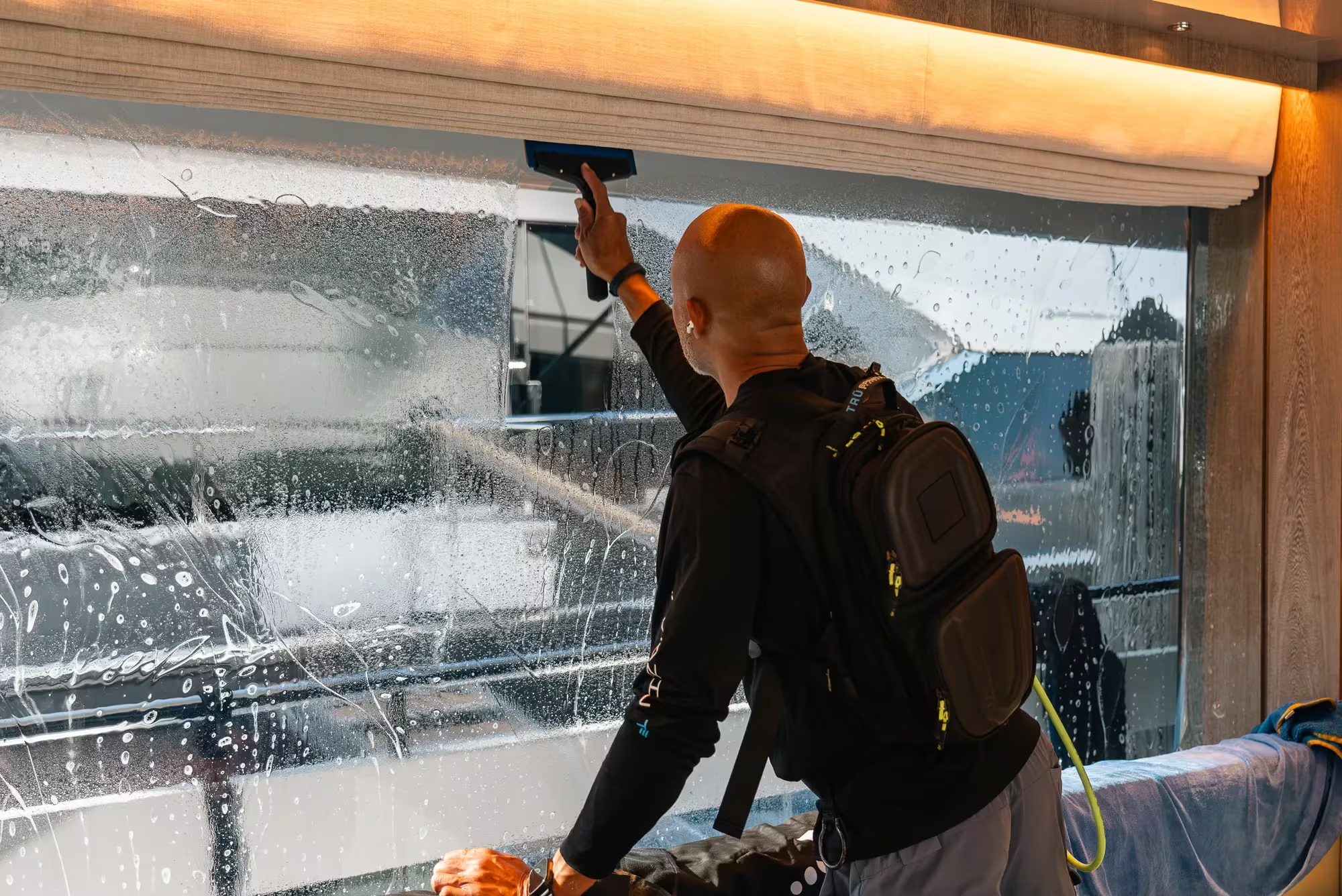

Marine window tint in Richmond, VA can make a noticeable difference when sunlight pours through a boat’s windshield, side glass, or cabin windows. Boat owners in Mechanicsville, VA & Richmond, VA often spend long hours on the water, and glass-covered cabins can take on heat, glare, and UV exposure throughout the day. A marine window film made for these conditions can help keep the cabin more comfortable while preserving outward visibility.
At Wooddy’s Detailing, we install window film for boat owners who want more comfort without covering their windows with curtains or shades. Our team works with XPEL products and is XPEL certified. We have served vehicle and boat owners since 2010 from our shop at 8492 Meadowbridge Rd in Mechanicsville.
Marine window film is not the same decision as simply choosing the darkest shade available. Boat glass varies widely. Some vessels use traditional glass, while others use acrylic or polycarbonate glazing. Windshield shape, cabin use, visibility needs, and where sunlight enters the boat can all affect the film choice.
If you are considering window tint for a cruiser, yacht, cabin boat, fishing boat, or another vessel, this guide covers what marine film does, which film levels are available, and what boat owners should think about before installation.
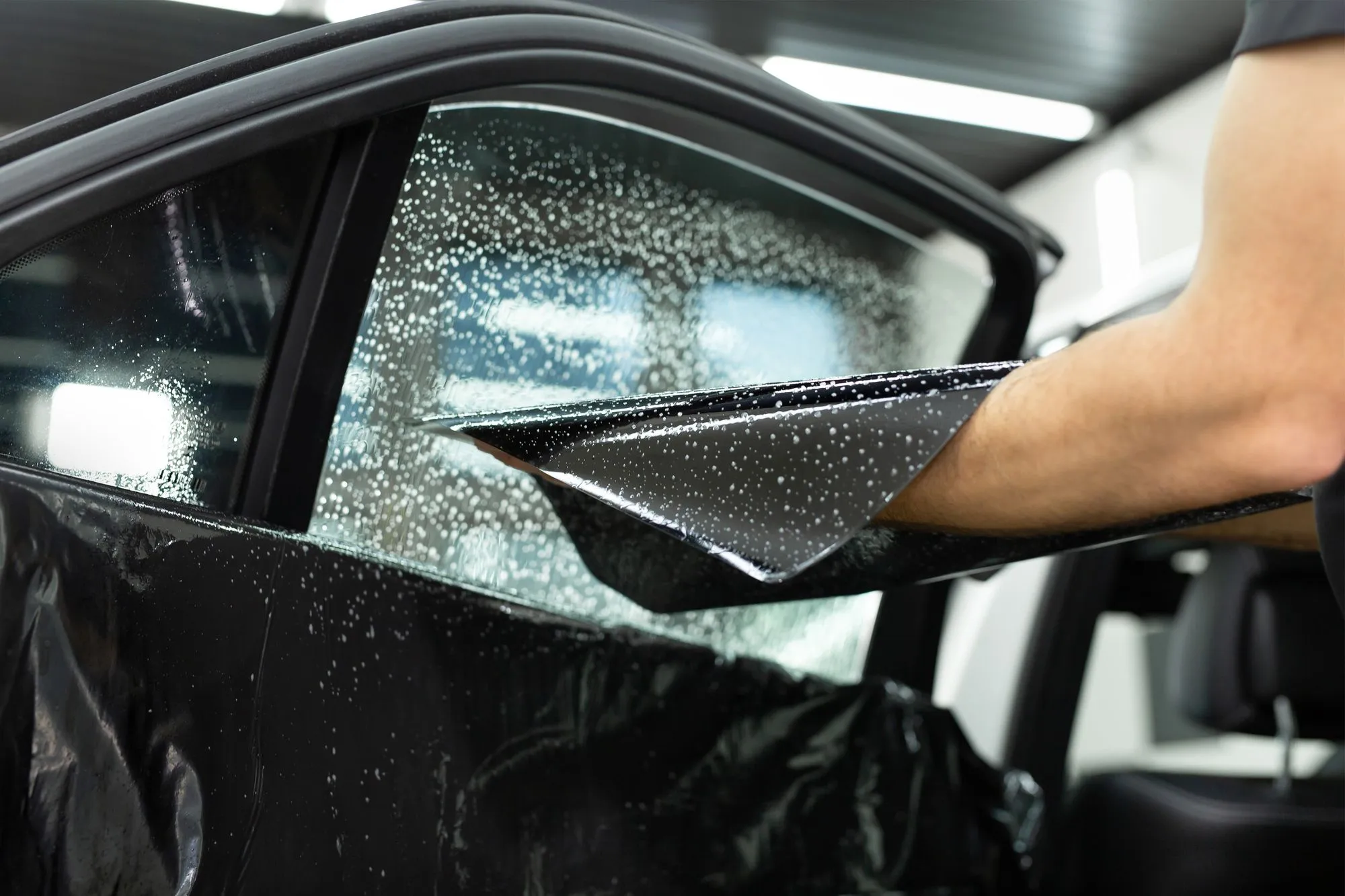
Marine window tint is window film intended for use on boat glazing. It can be applied to compatible cabin windows, side glass, and other suitable areas to help manage sunlight entering the vessel.
XPEL describes its marine window film as a product designed to reduce heat and glare while providing UV protection. The manufacturer offers several film shades, allowing boat owners to choose between lighter and darker appearances depending on the glass and how the vessel is used.
That choice matters because boats present a different viewing environment than cars. A captain may need a wide field of vision through multiple windows while moving through marinas, narrow channels, docks, or open water. A cabin owner may place more weight on heat control and privacy in side or rear windows.
The right setup may use one film level throughout the cabin or different film levels depending on each window.
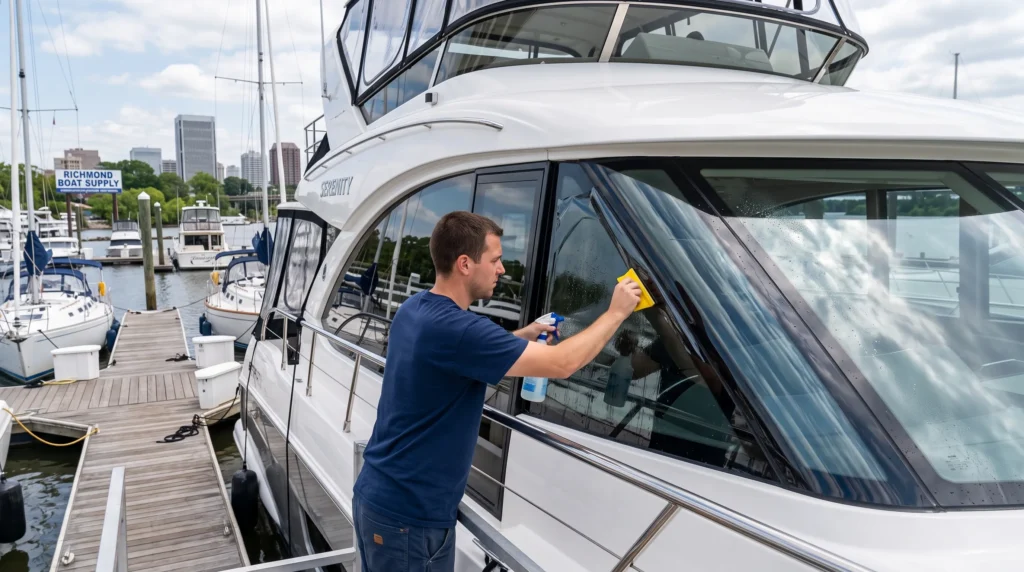
Boat owners interested in this service can learn more on our Marine Window Tint page.
A boat cabin with large windows receives a steady amount of sunlight during a day on the water. Unlike a shaded room, many boat cabins have glass on several sides. Sunlight may reach the interior through the windshield in the morning and through side or rear glass later in the day.
Water can also produce bright reflected light. This can make sunlight feel more intense while you are sitting at the helm or relaxing inside a cabin.
Glass allows light and solar energy into the enclosed space. Upholstery, dashboards, tables, flooring, and other surfaces absorb part of that energy and warm up. A closed cabin can then feel uncomfortable when you return after the boat has been sitting in the sun.
Marine window tint gives boat owners another way to manage this issue without fully blocking the view.
There are several reasons boat owners ask about marine window tint in Mechanicsville, VA & Richmond, VA.
XPEL Marine Window Film is designed to reject a portion of solar energy entering through the glass. XPEL’s current USA specification sheet lists total solar energy rejection values ranging from 45% to 64% for its marine films when tested on 1/8-inch glass.
Actual results on a boat can differ based on glazing type, window angle, film selection, direct sun exposure, and other conditions.
Still, reducing solar energy through the glass can make a cabin more pleasant during sunny boating days.
XPEL’s marine window film specification sheet lists 99% UV rejection across its 5%, 15%, 35%, 55%, and 75% marine film options.
UV exposure is one part of what can affect passengers and materials inside a boat over time. Installing film on compatible glazing gives owners another layer between the cabin and the sun.
Bright sunlight reflecting from the water can make viewing conditions uncomfortable. Window film can reduce the amount of visible light entering through selected windows.
The amount of glare reduction depends heavily on film shade and conditions on the water. Darker is not automatically better for every boat. Visibility should remain part of the selection process.
A darker film can make it harder to see into a boat cabin during daylight. This may appeal to owners of cruisers and cabin boats who spend extended time aboard.
Nighttime privacy works differently because interior lighting can make occupants visible through tinted glass. Window film should not be treated as a replacement for curtains where complete privacy is wanted.
Tint can also change the visual character of a vessel. Consistent window shading can give cabin glass a darker, more uniform appearance.
For many boat owners, this cosmetic change is a welcome side benefit rather than the only reason to tint the glass.
XPEL currently lists marine window film options identified as 5%, 15%, 35%, 55%, and 75%.
These numbers relate to the film product, while the manufacturer also publishes tested visible light transmittance values when the films are placed on 1/8-inch glass.
According to the XPEL Marine Window Film USA Specification Sheet, the listed tested values are:
| XPEL Marine Film | Tested Visible Light Transmittance | Total Solar Energy Rejection | UV Rejection |
|---|---|---|---|
| 5% | 6% | 64% | 99% |
| 15% | 16% | 63% | 99% |
| 35% | 37% | 58% | 99% |
| 55% | 55% | 50% | 99% |
| 75% | 77% | 45% | 99% |
XPEL states that these figures are nominal guidance values based on film applied to 1/8-inch glass. They should not be read as a guarantee that every boat window will produce identical results.
Here is why that matters. Marine glazing varies considerably from one boat to another. Existing tint in the glass, glazing material, thickness, curvature, and other properties may affect what the finished window looks like and how much light passes through it.
Choosing the film shade often starts with one question: What do you want to change?
If the cabin already feels dark, a lighter film may make more sense. If large side windows create heavy daytime glare and heat, another film level may suit the space better.
A 75% film is one of the lighter choices in XPEL’s marine lineup. The specification sheet reports 77% visible light transmittance on the test glass.
This type of film may appeal to owners who want high light transmission while still gaining solar and UV rejection.
XPEL’s 55% marine film produces a middle-ground appearance. Its published test data lists 55% visible light transmittance and 50% total solar energy rejection.
It can be worth discussing for cabins where owners want some visible shading without moving into a much darker look.
The 35% option produces a more noticeable tint. XPEL reports 37% visible light transmittance on its test glass and 58% total solar energy rejection.
This may work well on selected cabin windows where daytime glare and sun exposure are frequent concerns.
These are dark films. XPEL’s specification sheet lists 16% visible light transmittance for the 15% film and 6% for the 5% film under its test conditions.
Very dark film can change nighttime and low-light visibility. Placement should be considered carefully, especially around areas used for navigation.
The real question is not simply, “How dark can I go?” It is, “Which film makes sense for how I use this boat?”
Boat windows serve different jobs.
A windshield is closely connected to navigation. Cabin side windows may be used more for scenery, daylight, heat control, and privacy. Rear windows may receive another pattern of sun exposure.
That means one shade does not have to be treated as the automatic answer for every piece of glass.
When looking at a boat, we can consider:
This is one reason professional inspection before installation makes sense. The installer can see the actual glazing instead of making a recommendation from a boat model name alone.
This is one of the biggest differences between marine window tint and a routine automotive tint job.
Not every boat window is conventional glass.
Some vessels use polycarbonate or acrylic glazing. These materials can release gases over time, which may create bubbles or blistering beneath a film that was not installed with the right preparation.
XPEL addresses this directly in its marine window film specification sheet. The company calls for a Blister Prevention Film on polycarbonate or acrylic surfaces before XPEL Marine Window Film is applied.
According to XPEL, the blister-prevention layer is placed directly on the polycarbonate or acrylic glazing to address outgassing before the marine tint layer is installed.
This is exactly why a marine tint job should start with identifying the window material.
Installing film without knowing what the window is made from can lead to problems that might have been avoided with the correct film system.
UV protection is one of the strongest reasons many boat owners consider marine window film.
XPEL reports 99% UV rejection for its main Marine Window Film shades in its USA specification sheet.
The manufacturer also states that marine window film can help protect occupants and cabin interiors from UV exposure.
Boat cabins can receive sunlight for hours at a time. Seats, trim panels, dashboards, flooring, wood finishes, fabrics, and other materials may all be exposed through surrounding windows.
Window film cannot stop every cause of material aging. Moisture, cleaning products, wear, temperature, salt, and storage conditions can all play a part. It can still reduce one source of exposure reaching the interior through compatible glazing.
Heat rejection is another major reason owners look into marine window tint in Mechanicsville, VA & Richmond, VA.
XPEL’s published data lists total solar energy rejection between 45% and 64% across its principal marine tint shades on the manufacturer’s test glass.
XPEL also reports infrared energy rejection values of 60% or 64%, depending on the film.
These percentages should be read in the context of the manufacturer’s test method. They do not mean a boat cabin will become a fixed percentage cooler.
Cabin temperature depends on many factors, including:
What this means is that window tint can reduce solar energy entering through the treated glazing, but it works as one part of the boat’s overall heat-management setup.
Anyone who has spent time on open water knows how bright reflected sunlight can become.
Glare can come through the windshield, side glass, or windows behind the helm. Conditions change as the boat turns, the sun moves, and reflected light shifts across the water.
Tinted film reduces visible light transmission, with darker films allowing less visible light through under test conditions.
That can make bright daytime conditions easier on the eyes.
The catch is that the same darker film can also reduce available light after sunset or during poor weather.
A good film choice weighs both sides rather than looking only at daytime appearance.
A boat cabin may contain materials that are expensive or difficult to replace, including seating surfaces, dashboards, wood trim, tables, electronics housings, flooring, and decorative panels.
Sunlight entering through surrounding windows can expose those materials whenever the boat is uncovered.
XPEL states that its marine window film can help reduce interior fading by reducing UV exposure and solar heat.
Marine tint can be paired with other protection services when an owner wants to care for more than the windows.
Wooddy’s Detailing also offers Marine Ceramic Coating and Marine Paint Protection Film.
These services address different surfaces and concerns. Window film is aimed at the glazing and sunlight entering the cabin. Marine paint protection film is used on compatible exterior areas where physical surface protection is wanted. Marine ceramic coating can be used as another surface-care option.
You can view our Marine Services page to see the boat services available through Wooddy’s Detailing.
Marine window tint installation requires more than cutting a dark film to fit a window.
A boat can have curved glazing, tight corners, seals, frames, limited working space, and different glazing materials throughout the same vessel.
The installer also needs to assess whether the surface is glass, acrylic, polycarbonate, or another material.
Prep work matters because dirt, residue, and contamination trapped beneath the film can affect the finished appearance. Film edges also need close attention around window frames and seals.
At Wooddy’s Detailing, our team works with XPEL products and is an XPEL-certified shop. That gives boat owners access to technicians familiar with the manufacturer’s product system and installation requirements.
If you are unsure what type of glazing your boat has, you do not need to guess before contacting us. Bring us the vessel information you have, and our team can discuss the project with you.
Marine window tint handles one part of boat ownership. Other surfaces may need a different kind of protection.
Marine Paint Protection Film is made for selected boat surfaces where owners want a physical film between the finish and everyday contact.
XPEL states that its marine protection film can be installed on areas such as hull sides, engine cowlings, tables, and other compatible surfaces.
Marine Ceramic Coating is another option for owners looking to care for boat surfaces exposed to water and grime.
The right mix depends on which parts of the boat concern you most.
A cabin with extensive glazing may benefit from a window-film discussion, while a boat with exposed painted surfaces may call for a separate conversation about coating or protective film.
Boat owners in Mechanicsville, VA & Richmond, VA do not have to treat marine window tint as a one-size-fits-all product.
A better approach starts with the boat itself.
Look at where the sun enters the cabin, which windows create the most glare, whether privacy matters, and how often the vessel is used after dark. The glazing material should also be confirmed before film selection.
Wooddy’s Detailing has served customers since 2010 and is located at:
Wooddy’s Detailing
8492 Meadowbridge Rd
Mechanicsville, VA 23116
Phone: (804) 914-9274
Hours:
Monday through Friday: 8:30 AM to 6:30 PM
Saturday: 9:00 AM to 5:00 PM
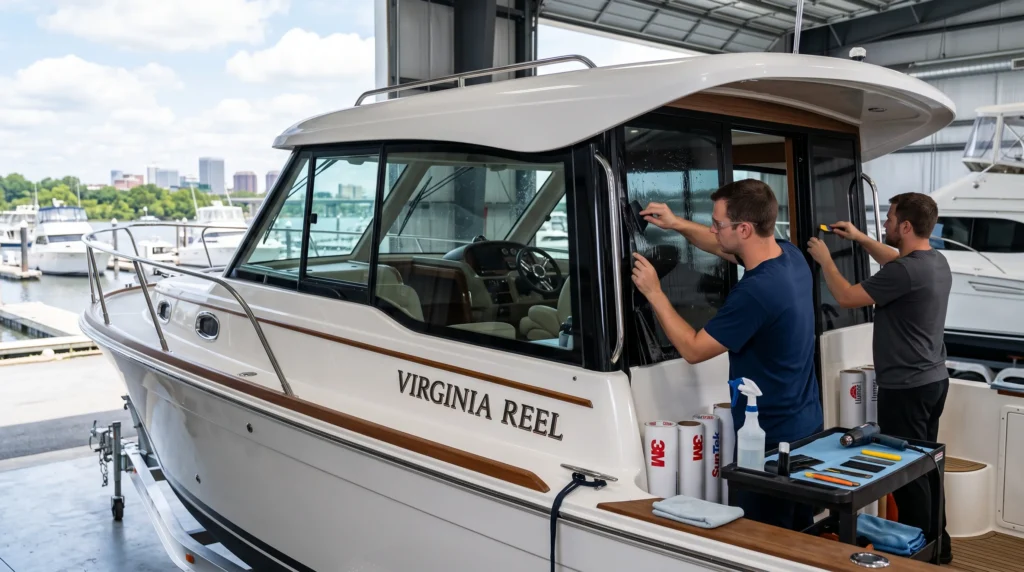
If marine window tint is on your list before your next boating season or weekend on the water, call (804) 914-9274 or visit our contact page to schedule an appointment.
Marine window tint can reduce solar heat, visible glare, and UV exposure entering through compatible glazing. XPEL also offers several film shades, giving owners choices between lighter and darker appearances.
Some boat windshields can accept window film, but the glazing material, film shade, placement, and visibility needs should be checked first. Windshields used for navigation deserve extra care when choosing visible light transmission.
XPEL says its Marine Window Film can be used with polycarbonate or acrylic glazing when its Blister Prevention Film is applied first. The added layer is intended to address outgassing from those materials.
XPEL’s USA specification sheet lists 99% UV rejection for its 5%, 15%, 35%, 55%, and 75% Marine Window Film products under the manufacturer’s test conditions.
There is no single shade that fits every boat. Your choice should account for sunlight, privacy, daytime comfort, low-light visibility, glazing type, and where each window sits on the vessel. Wooddy’s Detailing can review those factors before recommending a film.
XPEL’s published specification sheet shows higher total solar energy rejection for its darker marine films under its test conditions. The 5% film is listed at 64% total solar energy rejection, while the 75% film is listed at 45%. Film selection should still account for visibility and how the boat is used rather than heat rejection alone.
Wooddy’s Detailing provides marine window tint services from 8492 Meadowbridge Rd, Mechanicsville, VA 23116. Call (804) 914-9274 or use the Wooddy’s Detailing contact page to discuss your boat and schedule an appointment.
Contact Wooddy’s Detailing when you are ready to protect, improve, or restyle your vehicle with help from a trusted local shop. We proudly serve customers in Mechanicsville, VA and Richmond, VA with services that include paint protection film, color PPF, ceramic coating, window tint, vinyl wrap, paint correction, chrome delete, and auto detailing. Whether you have a daily driver, luxury vehicle, Tesla, Cybertruck, fleet vehicle, or boat, our team is here to help you choose the right service for your goals. Customers often contact us when they want better protection, easier upkeep, more privacy, or a cleaner finished look. We make it easy to reach out, ask questions, and move forward with the service that fits your needs. Since 2010, Wooddy’s Detailing has focused on giving local customers a clear process and dependable service. When you are ready to get started, our team is ready to help.
Explore the many services we offer by clicking the boxes below