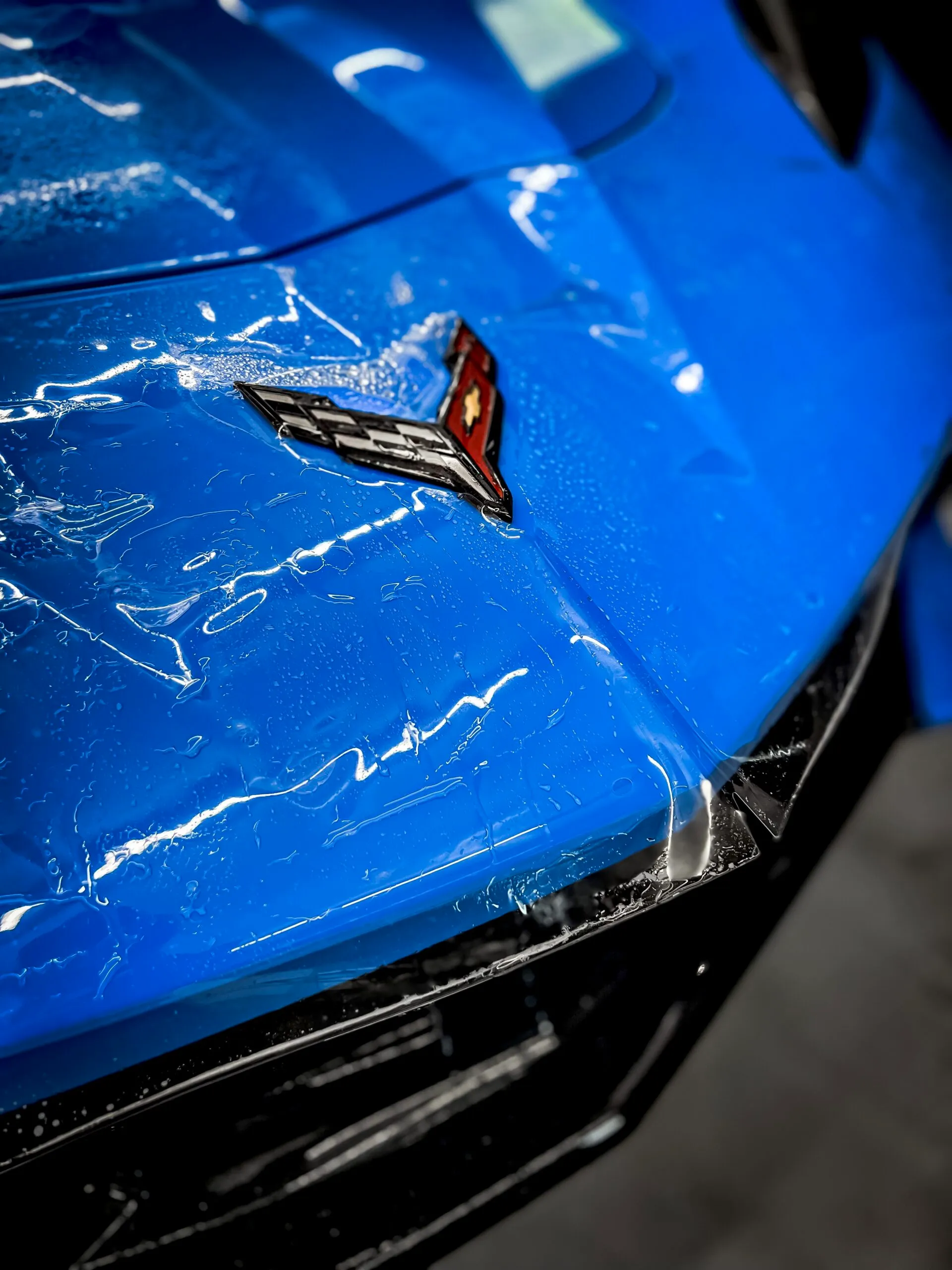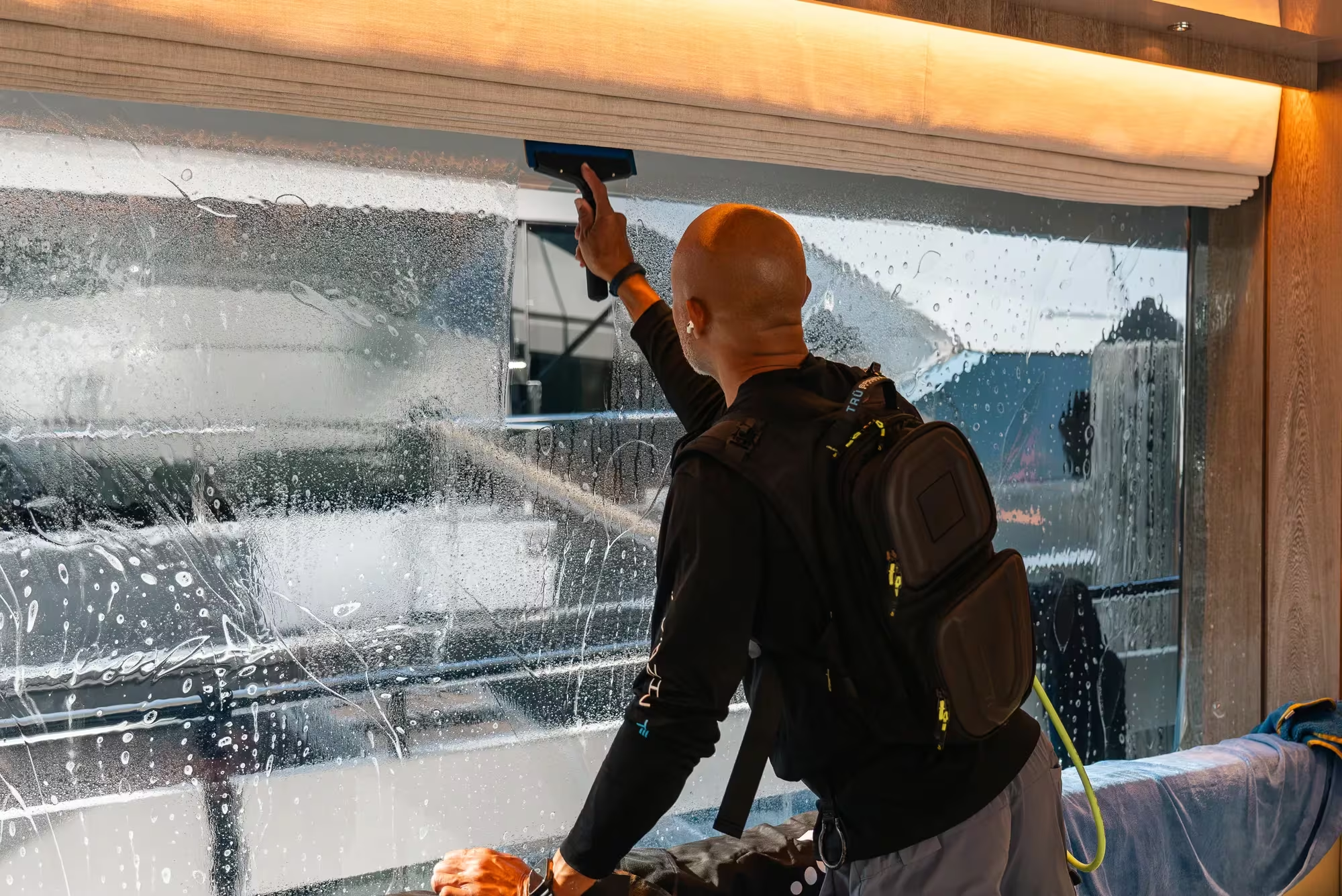

Marine Paint Protection Film for Boats in Richmond, VA gives boat owners a clear protective layer between finished surfaces and the scratches, scuffs, UV exposure, and contamination that come with time on the water. Boats in Mechanicsville, VA & Richmond, VA can face contact at docks, gear moving across surfaces, sun exposure, trailering debris, dirty water, and routine wear throughout the boating season.
Wooddy’s Detailing installs XPEL Marine Protection Film for boat owners who want to protect areas such as hull sides, bows, gunnels, engine cowlings, decks, kick areas, tables, and other compatible surfaces. We are an XPEL-certified shop and XPEL vendor located at 8492 Meadowbridge Rd in Mechanicsville, Virginia, and we have served customers since 2010.
Unlike wax or a ceramic coating, marine paint protection film is a physical polyurethane film. XPEL says its marine film is made to help resist scratches, UV exposure, and environmental contamination while keeping the appearance of the surface underneath.
For boat owners who care about keeping gelcoat, paint, and high-contact areas in good condition, marine PPF can be a smart addition to a broader boat-care plan.
Marine paint protection film, often called marine PPF, is a transparent polyurethane film installed over compatible finished boat surfaces.
XPEL says its Marine Protection Film is made for marine environments and helps guard surfaces against scratches, UV damage, and environmental contamination.
The film works as a physical barrier. Instead of contact reaching the gelcoat or painted surface first, the outer film takes much of that exposure.
This can be helpful on a boat because wear does not happen in only one place.
Fishing equipment may brush against a gunnel. Shoes may scuff a kick area. Dock lines, bags, coolers, and other gear can contact finished surfaces. Engine cowlings may see repeated cleaning and sun. Hull sides can pick up marks around docks or during handling.
Marine PPF is meant to help protect those surfaces while allowing the original finish to remain visible underneath.
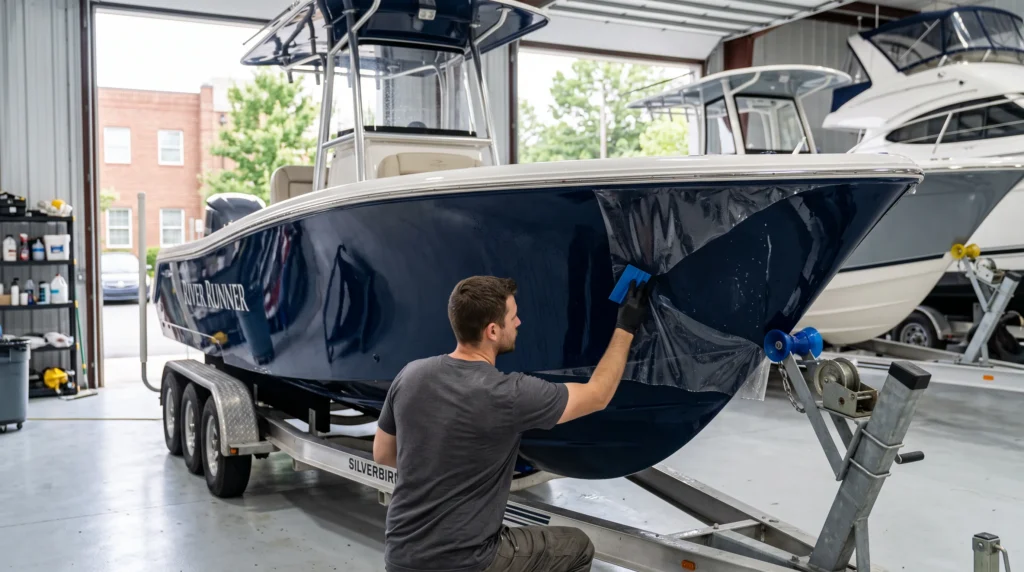
Learn more about our Marine Paint Protection Film service.
The main difference between marine PPF and a liquid coating is thickness and physical structure.
Ceramic coating forms a thin cured layer on top of a surface. Paint protection film is a separate polyurethane sheet bonded to the finish.
According to XPEL Marine Protection Film, the film is made to help defend against:
XPEL also describes the product as self-healing.
That means some light surface marks in the film can lessen when the film receives heat. XPEL says warm water or controlled heat may activate this behavior for surface-level scratches.
Deeper damage is different. A hard gouge or cut may require inspection or replacement of the affected film section.
What this means is marine PPF adds a replaceable protective surface over areas that might otherwise take direct wear.
Boats have many exposed areas, and not every surface receives the same type of contact.
XPEL lists several areas where Marine Protection Film may be used, including:
The exact coverage plan should depend on the vessel.
A fishing boat may benefit from film around high-contact deck and gunnel areas. A performance boat may need more attention around painted hull sections and engine cowlings. A cruiser may have tables, trim, and other finished surfaces that regularly see contact.
The real question is where your boat receives wear.
At Wooddy’s Detailing, we can look at those areas before deciding which sections make sense to cover.
The hull is one of the first areas boat owners think about when discussing Marine Paint Protection Film for Boats in Richmond, VA.
Hull sides can come into contact with docks, fenders, lines, debris, dirty water, and other objects during normal use.
XPEL lists hull sides among the areas suited for marine protection film.
Clear film lets the finish underneath remain visible while creating a layer above it.
This can appeal to owners who have glossy gelcoat, custom paint, striping, or finishes they want to keep from taking routine surface wear.
Film placement should still be planned around the waterline and the manufacturer’s intended use.
XPEL currently states that its three-year Marine Protection Film warranty applies to installations above the waterline.
If you are considering hull coverage, our team can discuss which areas of your boat fit the product and how the vessel is normally stored and used.
The bow takes a lot of exposure simply because of where it sits.
It can face water spray, bugs during trailering, airborne debris, contact during docking, and grime from travel or storage.
XPEL identifies the bow as one of the areas where Marine Protection Film can be installed.
A protective layer here can help reduce direct contact with the finish underneath.
Owners who trailer their boats may be interested in bow coverage because the front of the vessel can face road debris and insects during transport.
Boat owners who spend time around crowded marinas may also want to protect areas that are more likely to see contact while docking.
Gunnels and deck areas often see repeated contact.
People climb aboard. Equipment moves around. Fishing gear gets placed down. Bags, coolers, ropes, and tools may rub against finished sections.
XPEL lists both gunnels and decks among suitable protection zones.
This makes marine PPF useful for surfaces where wear comes from people using the boat rather than only from the environment.
XPEL also identifies kick areas as suitable places for protection film.
These sections can pick up marks from shoes and repeated entry or exit from the vessel.
For many boats, protecting these smaller high-contact sections can be just as useful as covering larger exterior areas.
Outboard engine cowlings can be one of the most noticeable painted areas on a boat.
They sit in direct sun and may be handled during routine maintenance, cleaning, storage, or inspection.
XPEL lists engine cowlings as another marine PPF application area.
Clear protection film can help shield the glossy surface from light scratches and environmental exposure without covering the factory appearance.
This can make sense on boats with large outboard engines where the cowling is a major part of the vessel’s appearance.
Many fiberglass boats rely on gelcoat for their smooth exterior finish.
Gelcoat can face UV exposure, oxidation, staining, scratches, and scuffs over time.
XPEL discusses gelcoat and painted marine surfaces as areas that can suffer from sun exposure and marine conditions.
Marine PPF can be installed over compatible finished surfaces after they have been inspected and prepared.
Surface preparation matters because film goes over the condition that is already there.
If gelcoat has heavy oxidation, staining, scratches, or other defects, those issues may need attention before installation.
PPF is not paint.
It will not repair damaged gelcoat or fill deep defects. The goal is to protect a properly prepared surface from new wear after the film is installed.
One feature of XPEL Marine Protection Film is its self-healing top layer.
XPEL says warm water or controlled heat can help remove or reduce some surface-level scratches in the film.
This is useful because boats commonly develop light marks from routine handling and washing.
It does not mean the film cannot be damaged.
Deep cuts, punctures, or severe abrasion may go through the film.
If a section takes heavy damage, replacing that piece of film may be preferable to repairing damage directly in the boat’s paint or gelcoat.
That replaceable barrier is one of the reasons boat owners consider marine PPF in the first place.
Boats may spend hours or days exposed to direct sunlight.
UV exposure can contribute to fading and oxidation of some marine finishes over time.
XPEL states that Marine Protection Film helps guard treated surfaces against UV damage.
This can be useful on hull sides, painted sections, cowlings, trim, and other areas that remain exposed while a boat sits outside.
Marine PPF does not remove the need for routine care, washing, covered storage when available, or inspection.
It simply gives the treated surface another layer of protection.
Marine PPF and marine ceramic coating are often discussed together, but they do different jobs.
Marine PPF is a physical polyurethane film.
It is suited for areas where scratching, rubbing, scuffing, or repeated contact is a concern.
Examples include hull sides, gunnels, engine cowlings, bow sections, decks, tables, and kick areas.
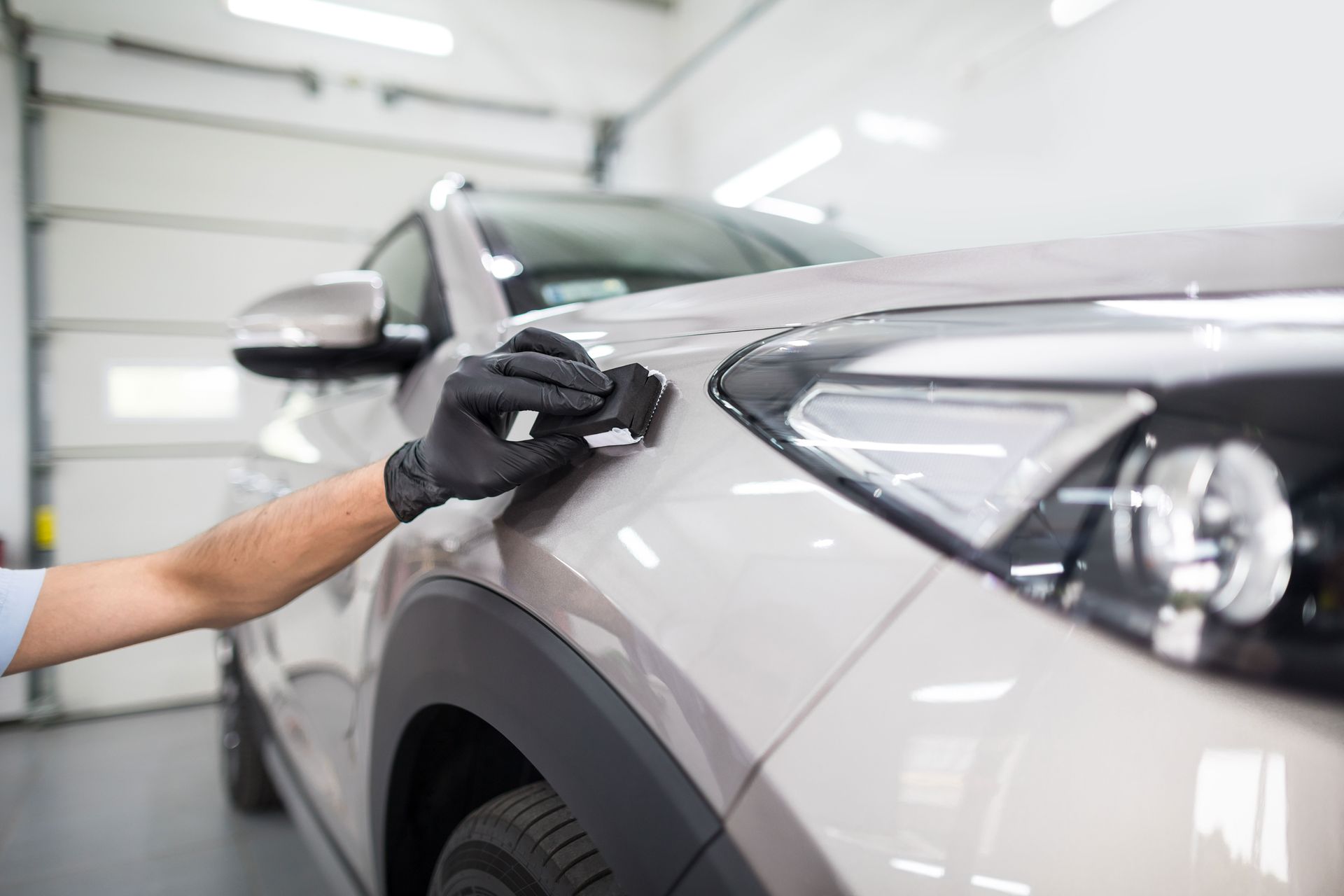
Marine Ceramic Coating is a liquid coating that cures on compatible surfaces.
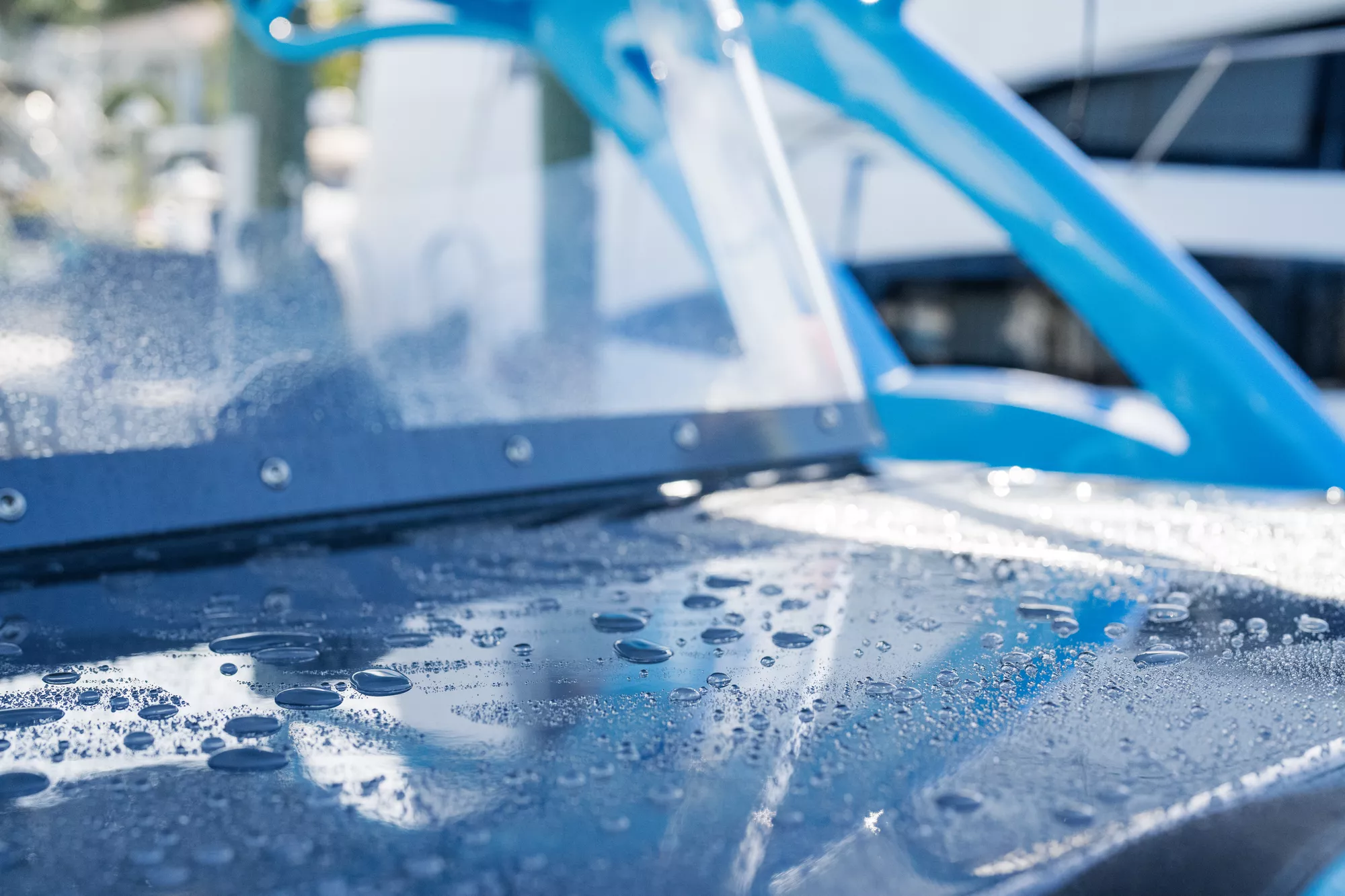
XPEL FUSION PLUS Marine provides hydrophobic behavior and helps protect surfaces from water, grime, UV exposure, and other marine contamination.
Ceramic coating is often chosen when owners want easier cleaning, water beading, gloss, and surface protection across larger areas.
It depends on what you are trying to protect against.
If physical contact and scratching are your main concerns, PPF may make more sense for those areas.
If water behavior and easier cleaning are higher on your list, ceramic coating may fit the job.
Some boat owners use both.
Yes.
XPEL states that FUSION PLUS Marine Ceramic Coating can be applied over its Marine Protection Film.
This creates a layered approach.
The polyurethane film handles much of the physical surface contact while the ceramic coating adds hydrophobic properties over the film.
That can be useful on boat areas that need both physical protection and easier cleaning.
You can learn more about this option through our Marine Ceramic Coating page.
Boat owners can also review all of our Marine Services if they are considering more than one type of protection.
XPEL’s current Marine Protection Film product page says the film can last up to three years, depending on exposure conditions and maintenance.
This is worth pointing out because some general XPEL FAQ pages provide different lifespan figures for PPF products.
For marine applications, we use the information listed on XPEL’s dedicated Marine Protection Film product page when discussing the current marine product.
Actual film life depends on how the boat is used and stored.
Factors can include:
Routine washing and proper care can help the film stay in better condition.
XPEL currently lists a three-year warranty for Marine Protection Film installed above the waterline.
The manufacturer says its marine warranty applies under its stated terms and installation requirements.
Wooddy’s Detailing is XPEL certified and an XPEL vendor.
That matters because marine film installation requires the correct surface preparation, placement, trimming, and handling methods.
Warranty details can depend on the film, installation area, and XPEL’s current terms at the time the work is completed.
Our team can go over applicable product warranty information when discussing your boat.
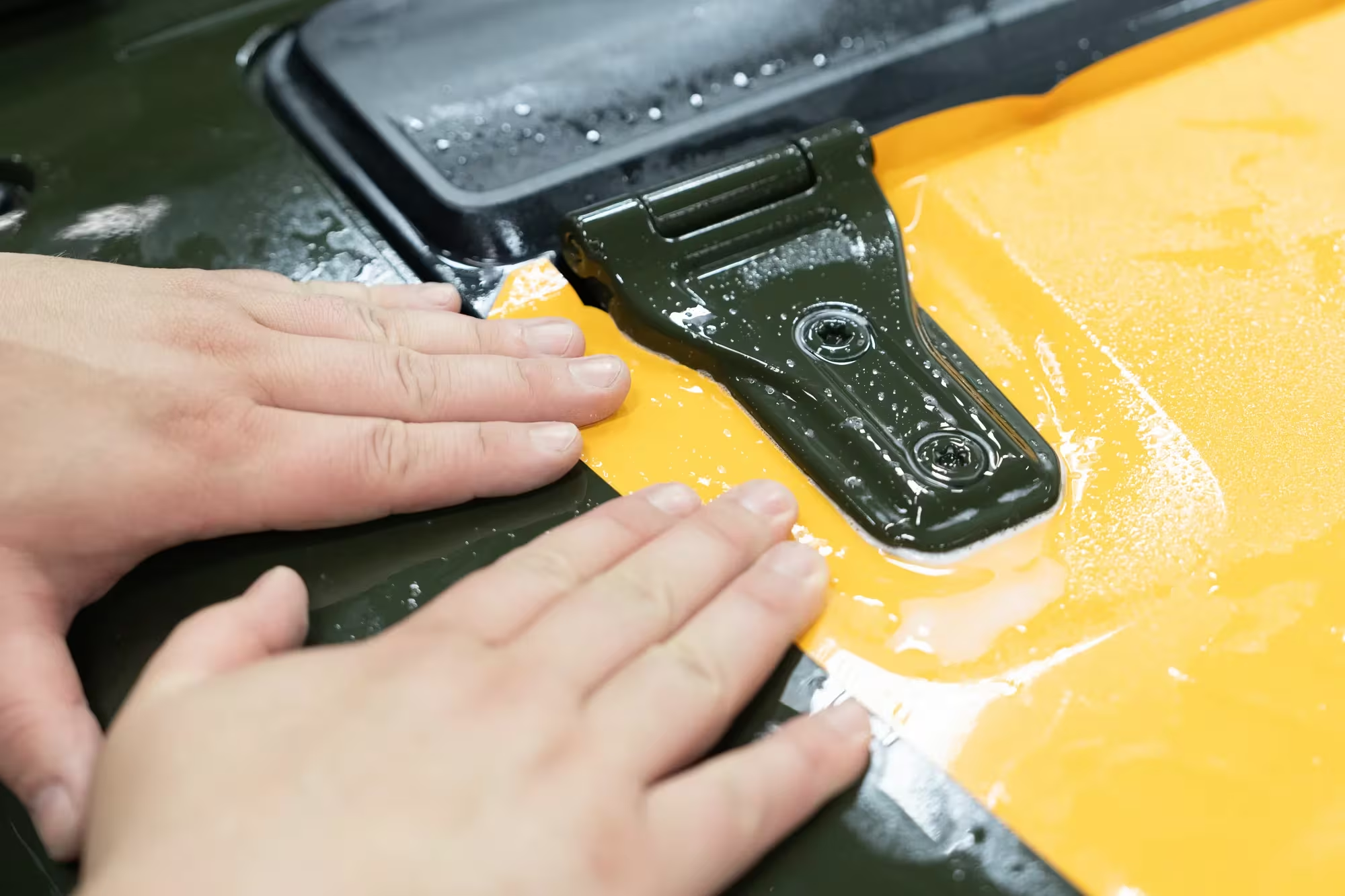
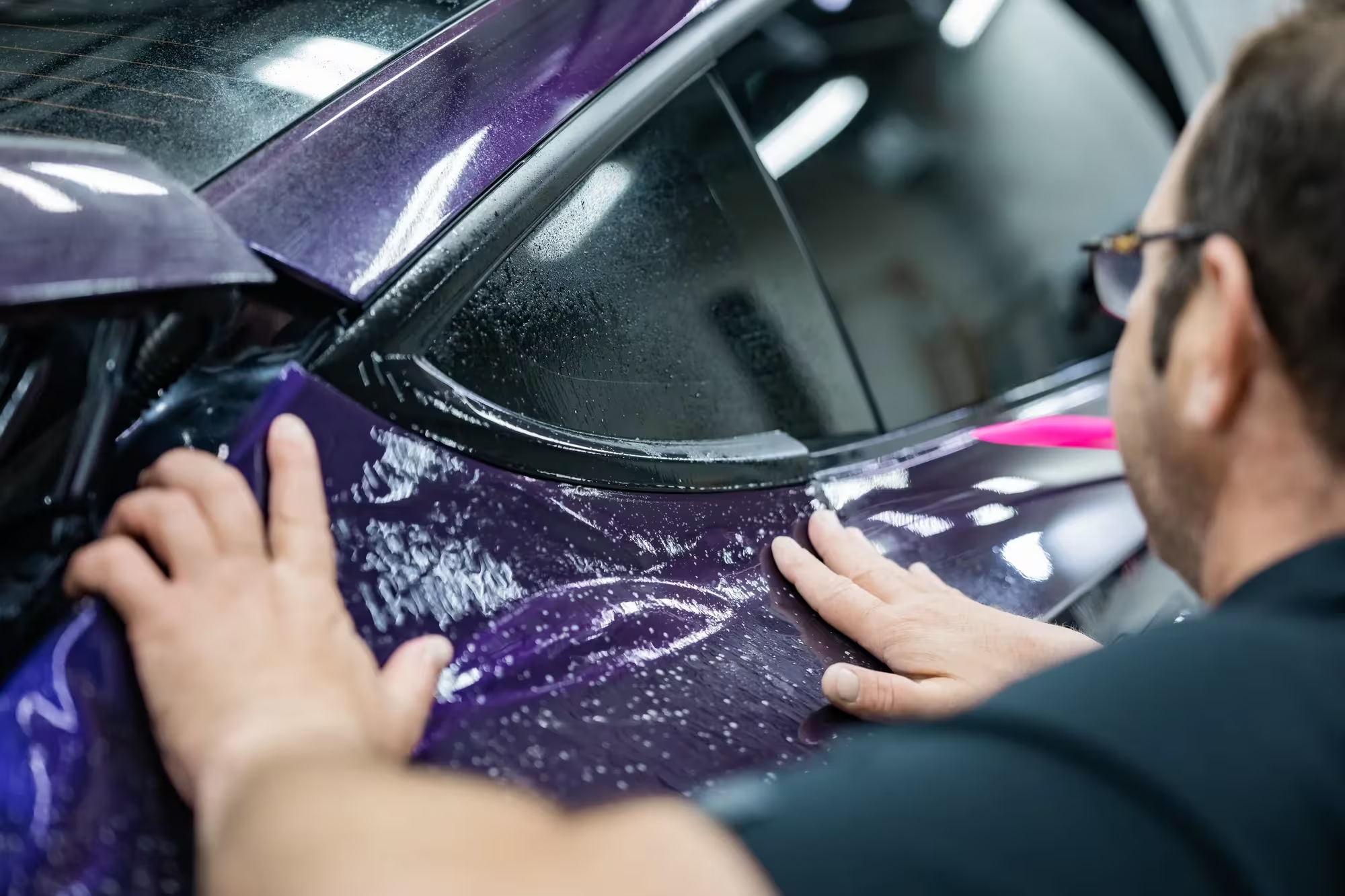
Marine PPF installation is different from placing a sticker over a flat panel.
Boats have curves, gelcoat, trim, rails, fittings, edges, cowlings, textured areas, and tight spaces.
Film must be shaped and positioned so that it follows the intended surface without unnecessary seams or poorly placed edges.
Preparation also matters.
The surface needs to be cleaned so contamination does not become trapped under the film.
If the boat has oxidation, stains, old residue, scratches, or other defects, the surface may need more work before film goes on.
Here is why.
Once clear film is installed, the condition underneath remains visible.
Good preparation helps the finished installation look cleaner and gives the adhesive a suitable surface to bond to.
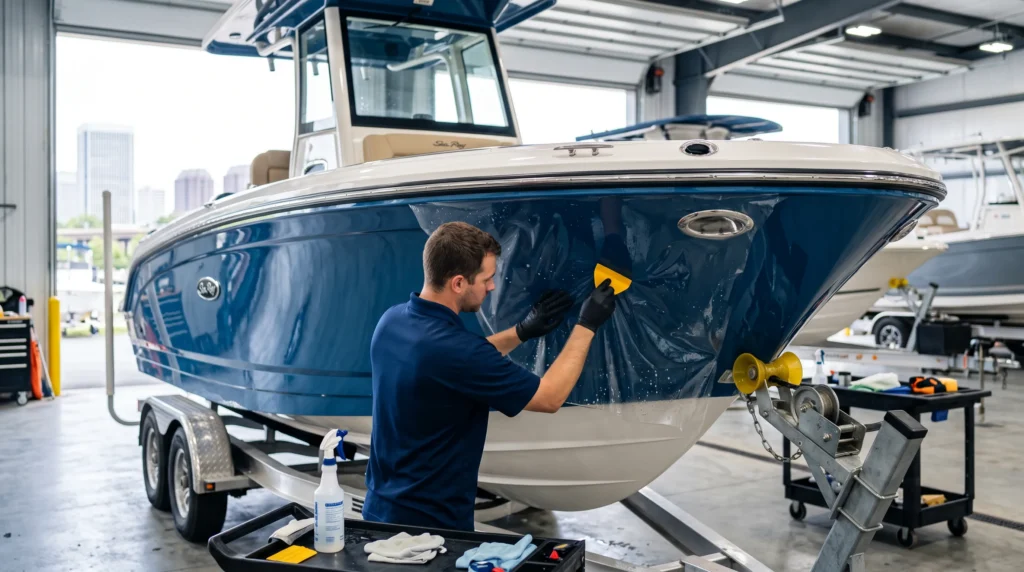
Professional inspection can also help decide where film makes sense and where another marine service may be a better fit.
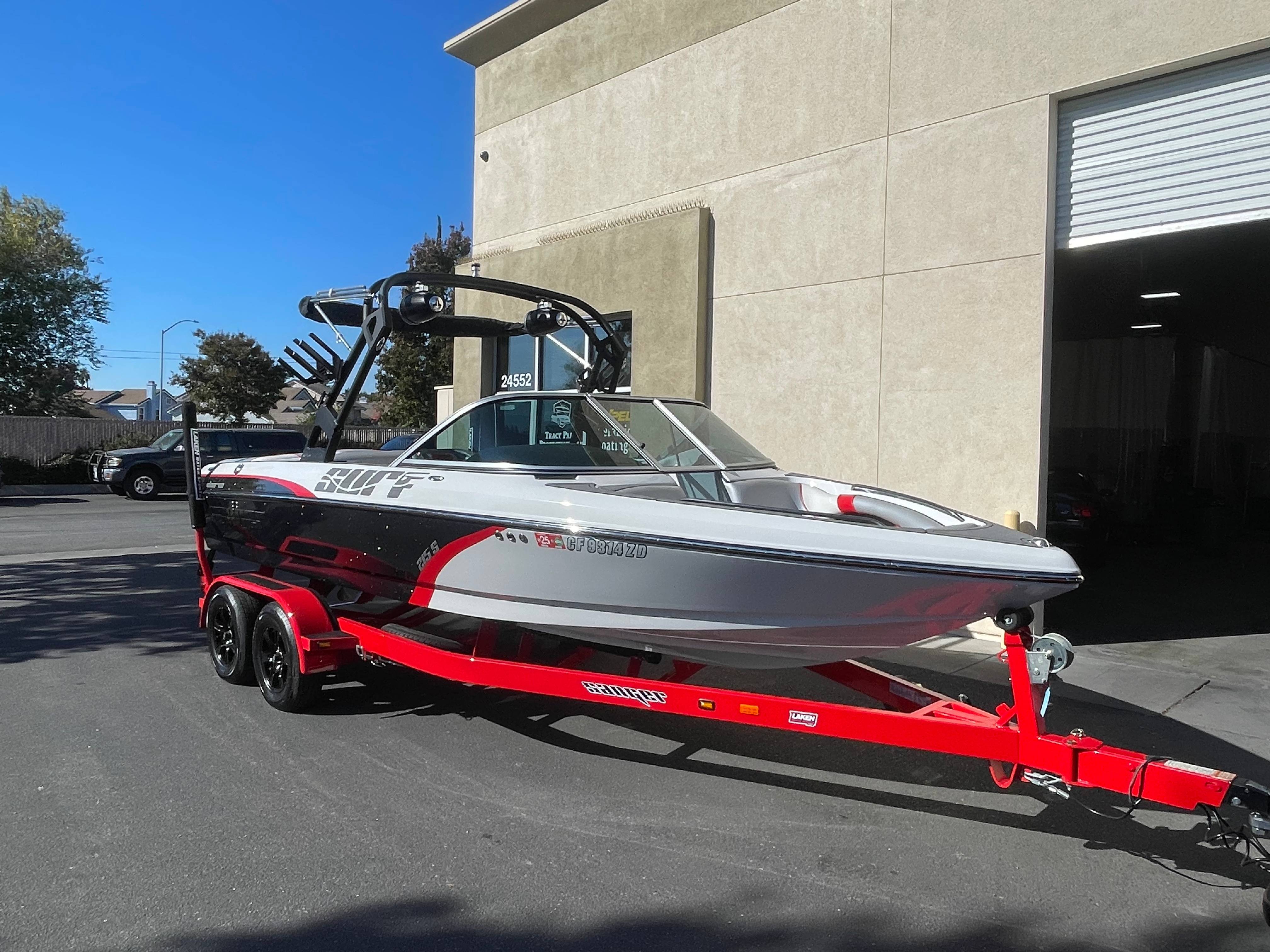
Marine Paint Protection Film for Boats in Richmond, VA can make sense for fishing boats, cruisers, center consoles, performance boats, wake boats, and other vessels with painted or gelcoat surfaces that see regular wear.
Boat ownership around Mechanicsville, VA & Richmond, VA can involve trailering, marina use, freshwater trips, extended sun exposure, repeated washing, and frequent loading and unloading.
Each of those situations can create wear in different areas.
A boat that gets trailered often may need more protection around the bow and forward-facing surfaces.
A fishing boat may see more contact around the gunnels and deck.
A boat with multiple outboard motors may benefit from protection on glossy engine cowlings.
The right marine PPF plan does not have to mean covering every surface.
It can focus on the areas most likely to get scratched or marked.
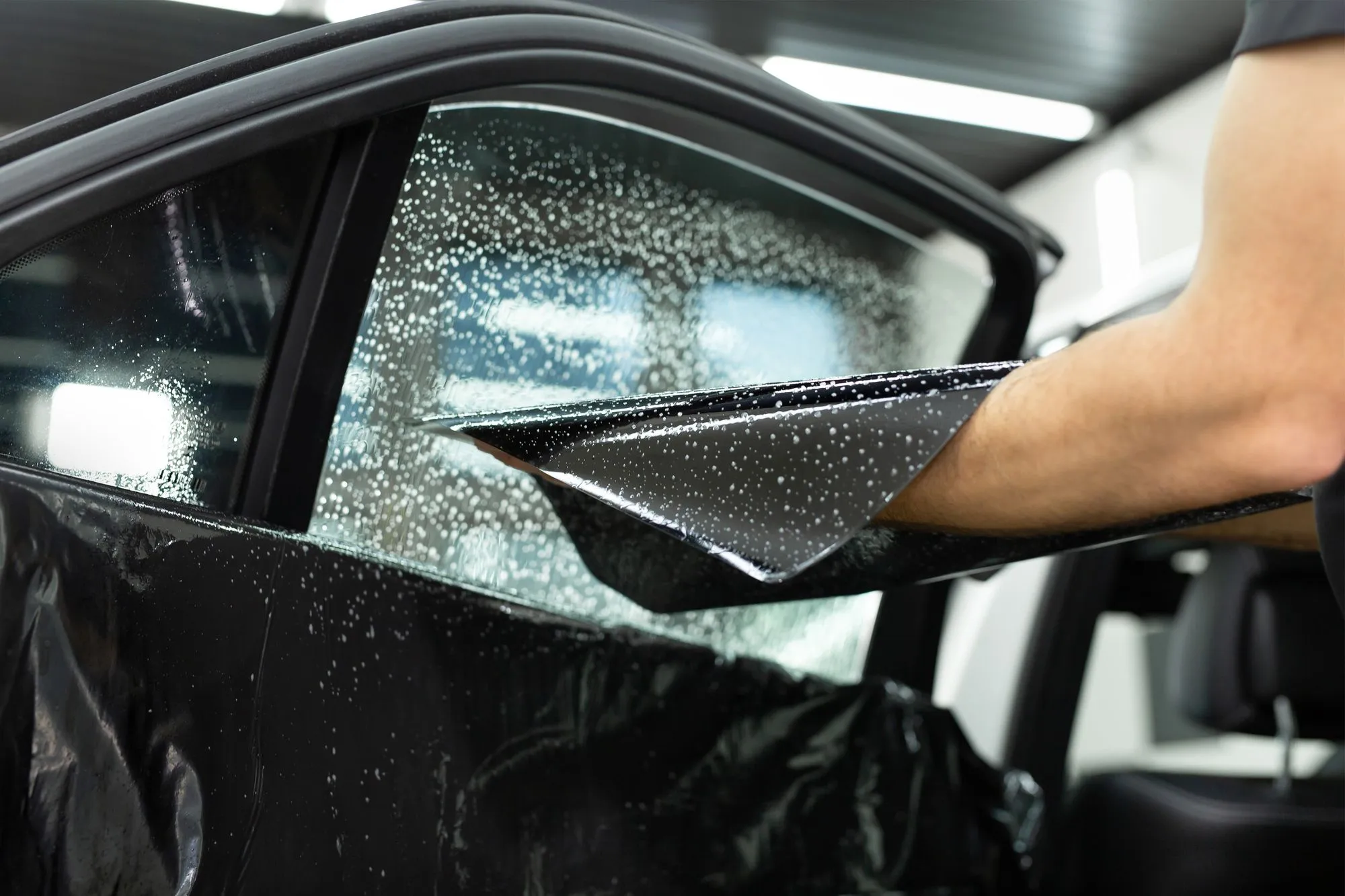
Wooddy’s Detailing offers XPEL Marine Protection Film along with Marine Ceramic Coating and Marine Window Tint.
Our shop is located at:
Wooddy’s Detailing
8492 Meadowbridge Rd
Mechanicsville, VA 23116
Phone: (804) 914-9274
Hours:
Monday through Friday: 8:30 AM to 6:30 PM
Saturday: 9:00 AM to 5:00 PM
If you want to protect your boat’s hull, bow, gunnels, engine cowlings, deck areas, or other compatible surfaces, call (804) 914-9274 or visit our contact page to schedule an appointment.
Yes. XPEL makes Marine Protection Film for compatible boat surfaces. The manufacturer lists hulls, bows, gunnels, decks, engine cowlings, kick areas, table tops, and other high-contact areas among possible installation locations.
XPEL says its Marine Protection Film is made from transparent polyurethane. The material creates a physical layer over the finished surface to help protect against scratches, UV exposure, and environmental contamination.
Marine PPF can be applied to compatible gelcoat surfaces after inspection and preparation. Oxidation, stains, scratches, or other surface defects may need attention before installation because clear film does not repair damaged gelcoat.
XPEL says Marine Protection Film is designed to help protect boat surfaces against scratches and regular wear. It also has self-healing properties that can reduce some light surface marks when heat is applied. Deep cuts or severe damage may require film replacement.
XPEL’s current dedicated Marine Protection Film page says the film can last up to three years depending on exposure conditions and maintenance. Actual service life can vary based on how a boat is used, cleaned, and stored.
XPEL currently lists a three-year warranty for Marine Protection Film installed above the waterline, subject to the manufacturer’s warranty terms. Wooddy’s Detailing is XPEL certified and can discuss applicable warranty information before installation.
Wooddy’s Detailing installs XPEL Marine Protection Film from our shop at 8492 Meadowbridge Rd, Mechanicsville, VA 23116. Call (804) 914-9274 or use our contact page to discuss the areas of your boat you want to protect and schedule an appointment.
Contact Wooddy’s Detailing when you are ready to protect, improve, or restyle your vehicle with help from a trusted local shop. We proudly serve customers in Mechanicsville, VA and Richmond, VA with services that include paint protection film, color PPF, ceramic coating, window tint, vinyl wrap, paint correction, chrome delete, and auto detailing. Whether you have a daily driver, luxury vehicle, Tesla, Cybertruck, fleet vehicle, or boat, our team is here to help you choose the right service for your goals. Customers often contact us when they want better protection, easier upkeep, more privacy, or a cleaner finished look. We make it easy to reach out, ask questions, and move forward with the service that fits your needs. Since 2010, Wooddy’s Detailing has focused on giving local customers a clear process and dependable service. When you are ready to get started, our team is ready to help.
Explore the many services we offer by clicking the boxes below